Sponsor Profiles
The organising committee welcomes and acknowledges the support of the our sponsors.
Sponsor Profiles
The organising committee welcomes and acknowledges the support of the our sponsors.
Wilderlab is a world-leading environmental DNA (eDNA) service provider. Our purpose-built molecular laboratories in Wellington NZ offer a comprehensive range of eDNA sample collection kits and sequencing services, catering to the conservation, biosecurity, education, and primary sectors. Our clients include local and central government, environmental consultancies, primary sector organizations and community groups.
Since 2019, Wilderlab has spearheaded the adoption of eDNA monitoring and surveillance across Aotearoa New Zealand. Our expert team offers extensive experience in molecular biology, ecology, and bioinformatics, dedicated to enhancing our understanding of the environment and its inhabitants. By fostering collaborative research partnerships, we have developed and optimized a suite of highly sensitive eDNA tools, including a comprehensive multi-species assay panel and a world-first aquatic ecosystem health index (the taxon-independent community index, or TICI).
At Wilderlab, we recognize the critical role that communities play in monitoring and protecting our natural world. We have empowered hundreds of volunteers to generate high-quality environmental data by sponsoring and participating in outreach activities. Our innovative solutions and community partnerships aim to revolutionize the way people discover, preserve, and cherish their natural environment.
For more than 20 years, Illumina has aspired to improve human health by unlocking the power of the genome. Now, next-generation sequencing is enabling the discovery and understanding of the structure, function, and diversity of plant and animal genomes. Through innovation and collaboration with researchers around the globe, we are driving genomic breakthroughs that promote food security and conservation efforts.
The biodiversity crisis is a significant issue which has far reaching impacts on the environment, food security and human health. It is essential to maintain diversity across ecosystems, diversity across species and diversity across genes. Next-Generation Sequencing (NGS) is powerful tool for studying ecosystem biodiversity, as it offers the ability to analyze complex environmental DNA samples. eDNA sequencing promises to be a vital tool for biomonitoring and conservation biology. Compared to traditional DNA methods, Next-generation sequencing (NGS) enables simultaneous profiling of thousands of species from a single sample with high sensitivity, thus uncovering the full breadth of diversity in an ecological sample.
In 2020 Curtin University and BHP joined forces in a powerful new partnership to develop research and innovation projects, and support the higher education of emerging leaders.
As a leading global resources company, BHP has committed to working side-by-side with Curtin to apply innovative thinking, world-class expertise and novel solutions to shape the future of the resources and energy sector and produce job-ready graduates to focus on some of the big challenges in our future. One partnership with Curtin University is to support research on developing and applying environmental DNA (eDNA) techniques to address challenges related to biodiversity loss and sustainability in our changing world.
The BHP and Curtin University eDNA partnership is a multi-year program with distinct projects that each builds and expands the utility of eDNA as a biological monitoring tool. It is a global environmental initiative with aquatic and terrestrial contexts spanning across Australia and Chile.Find out more about the eDNA for Global Environment Studies (eDGES) program at: http://edgesprogram.org/
Biologic is a future thinking biodiversity company based in Perth, Western Australia. Comprising over 110 experienced scientists, Biologic offers a comprehensive range of biodiversity services, including biodiversity surveys, monitoring, genetic studies, land restoration, and impact assessments.
Our diverse team of ecologists, botanists, zoologists, geneticists, and geologists collaborates with various industries to meet legislative and Environmental, Social, and Governance (ESG) requirements. We assist private companies and government agencies to understand and develop strategies to protect and restore the biodiversity of the land they manage.
Biologic’s molecular team, led by Dr Joel Huey, is at the forefront of applying genomic tools to support field research. We employ various innovative eDNA technologies for sampling of water, soil, air and surfaces, supported by our DNA barcoding service to improve the completeness of available DNA sequence libraries. Our in-house specialists look after the end-to-end eDNA process, from fieldwork sampling, data processing, analysis, and species identification. We don’t just provide the scientific data results but also the narrative, providing meaningful molecular insights to our clients.
Biologic Molecular is a team within Biologic Environmental Survey. Biologic Environmental Survey is part of the Biologic Group with Biologic Seed and Biologic Nature and Community.
At Biologic we partner with you to ensure your project’s economic, environmental, and social value are fully aligned and maximised.
Minderoo is a proudly Australian philanthropy, working to forge a fair future by courageously challenging inequalities and campaigning for meaningful change. Founded by Dr Andrew Forrest AO and Nicola Forrest AO in 2001, we have been delivering ground-breaking programs and research for 24 years within our homeland Australia, for our Asia Pacific neighbours and to the world. Determined to remove barriers that prevent the creation of a fair future, we focus our efforts on three key areas – communities, gender equality and natural ecosystems.
CSIRO is Australia’s national science agency. As one of the world’s largest mission-driven multidisciplinary science and research organisations, we solve Australia’s greatest challenges through innovative science and technology. CSIRO recognises that research methods are evolving rapidly. This provides opportunities to address previously intractable science questions by bringing together cross-disciplinary capabilities. The Environomics Future Science Platform (FSP) at CSIRO brings together genomics, bioinformatics and nano-technologies. Our goals are to find new resources in nature and reinvent how we measure and monitor ecosystem health, change and threats. The Environomics FSP is home to some of Australia’s leading eDNA scientists. We are at the forefront of developing new technologies that make eDNA analysis more effective and accessible. We develop and test methods for eDNA collection and analysis in water and on land. We explore analytical and molecular approaches that take eDNA beyond simple species detection, and we’re building a National Biodiversity DNA Library to ensure eDNA sequences can be matched to species. Through this conference, we are building networks of eDNA research partners nationally and globally to build the skills and science for an eDNA future of environmental measurement.
The Australian Institute of Marine Science | AIMS
Through our half-century of pioneering research as Australia’s tropical marine science agency, AIMS is uniquely placed to provide the expert advice and solutions required to help preserve our marine estate and ensure its sustainable use.
Our science focuses on developing practical solutions to deliver impact. It informs good environmental policy and management practices by governments and industry; it improves tropical marine health; creates national benefit; and protects coral reefs from climate change.
At AIMS we are focused exclusively on tropical marine science and ecosystems. Our domain is Australia’s northern waters from Ningaloo in the north-west, across the Top End, to the iconic Great Barrier Reef. Our researchers survey and document marine life from microbes to whole reef systems, we monitor changes and identify trends in the marine environment.
We have a proven track record of successfully delivering significant environmental, societal and economic value. As the nation’s authority on tropical marine science, we provide answers for government decision making and provide our industry partners with the scientific information to find better solutions to their business problems. AIMS science has improved sustainability of industry and led to Government delivering better environmental outcomes for the country.
AIMS has a solid history of successful, well-handled, large-scale, collaborative projects. We bring to every partnership our world-class research infrastructure, long-term science knowledge and vast experience of northern Australian waters.
Our scientists are among the best in the world in their field, and are backed-up by AIMS’ fit-for-purpose platforms and facilities. This is why AIMS routinely ranks in the top three marine science organisations in the world. Our level of scientific excellence is recognition of our international pre-eminence.
AIMS is a world leader in tropical marine. Our staff are dedicated to:
Parks Australia is responsible for the management of six terrestrial parks and 60 Australian Marine Parks. Guided by our purpose to protect, conserve and enhance the values of Commonwealth parks and gardens for the use and well-being of all Australians.
These areas protect Australia’s unique biodiversity, cultural heritage, and natural landscapes, supporting conservation, sustainable use, and tourism.
Our terrestrial parks include Kakadu National Park Uluru-Jata Tjuta National Park, and Booderee National Park, which are jointly managed with their Traditional Owners. Other terrestrial parks include Norfolk Island National Park Christmas Island National Park, and Pulu Keeling National Park.
Parks Australia also oversees Australian Marine Parks, covering 3.8 million square kilometres or 43% of Australian waters. These Parks help conserve marine habitats and the species that rely on them, while also providing places for wildlife watching, diving, boating, snorkelling, and fishing. They create jobs in industries like fishing and tourism and provide food and energy.
Efficient, effective, and evidence-based management is core to Parks Australia’s approach to making management decisions. Critically, this includes integrating Traditional knowledge, innovative science and partner-supported approaches to delivery.
SEQUENCH delivers cutting-edge molecular analysis of complex environmental samples, offering innovative, science-driven solutions for eDNA/eRNA-based environmental monitoring. Led by a passionate team of scientists and technicians with deep expertise in molecular research, we specialize in transforming challenging projects into success stories. We tailor every aspect—from customized sample collection solutions and design to advanced sequencing and comprehensive data analysis—to meet your specific needs. At SEQUENCH, we prioritize producing high-quality, reliable data, adhering to rigorous protocols aligned with the best practices in the field. Our commitment to scientific excellence and ethical integrity ensures that we deliver results that are precise, actionable, and tailored to your goals.
Cawthron Institute, New Zealand’s largest independent science organisation, is a leader in delivering world-class science for a better future. Based in Nelson, our science supports healthy ecosystems, a prosperous blue economy and thriving people and communities. While protecting our unique marine and freshwater environments, our science uses innovative ideas and technology to support New Zealand’s primary industries to develop enduring solutions and create sustainable value from precious natural resources. Since our establishment 100 years ago, our scientists have been identifying emerging areas of research to assist industry – and New Zealand.
Discover nature through the power of eDNA
eDNA Frontiers applies innovative environmental DNA techniques to explore a vast array of biodiversity, helping catalogue and protect ecosystems and the species within them.
Our eDNA service specialises in advanced eDNA metabarcoding techniques that enable biodiversity audits and biomonitoring to advance rapidly. Species specific testing and development capabilities for custom assays and reference sequences to capture new interest groups help complete opportunities to enhance interpretive power in your decision-making.
Our experience spans multiple application fields including the oil/gas and minerals sector, environmental impact assessments, conservation monitoring both nationally and internationally, and screening programs for invasive marine species detection in ports, shipping zones, and infrastructure builds. We can select from over 130 metabarcoding assays that have detection ranges from broad organism captures (e.g., eukaryotes or vertebrates) to those focussed on specific taxa groups (e.g., elasmobranchs).
Expertise has been gained from over a decade working on ancient DNA and environmental DNA. We are an unrestricted service provider and can be openly accessed by industry, governments, and community, while also offering collaborative power with the highly cited academic group at the Trace and Environmental DNA lab (TrEnD).
Website: https://www.ednafrontiers.com/
AdvanSentinel is a cutting-edge startup specializing in the processing of environmental DNA (eDNA).
Our mission is to provide a range of innovative products that address the challenges faced by eDNA researchers—such as improving sensitivity, increasing nucleic acid yields, reducing time and labor, and enabling automation. Our focus goes beyond environmental DNA in water bodies to include pathogenic microorganisms found in wastewater and other environmental sources, with the ultimate goal of making invisible DNA “visible” and contributing to societal well-being.
Currently, we offer two flagship products. The first is “COPMAN,” a reagent kit for extracting nucleic acids from environmental samples. This high-sensitivity kit allows for the detection of environmental nucleic acids, extraction of multiple targets with various protocols, and is automation-ready. Our second product is “QuickConc,” a kit that significantly improves the concentration process of environmental nucleic acids.
One of our key initiatives has been advancing the social implementation of wastewater-based epidemiology (WBE) for monitoring pathogenic microorganisms in wastewater. Our highly sensitive concentration technology, developed during this process, has demonstrated the ability to detect one COVID-19 case per 100,000 people within a wastewater catchment area. This technology is also adaptable to a wide range of pathogens and is suited for automation. More recently, leveraging our technology, we have expanded our focus to the One Health perspective, successfully detecting the H5 subtype of avian influenza from lake water.
It offers exceptional convenience, reduces concentration time, and maximizes nucleic acid yields. Both products embody our cutting-edge technology and represent the pinnacle of our innovations.
The Centre for Tropical Water and Aquatic Ecosystem Research (TropWATER – www.tropwater.com) conducts influential research in fields related to water science, resource management and the ecology of aquatic ecosystems. The Centre has a strong, but not exclusive, focus on tropical systems, both in Australia and internationally. It is concerned with major issues in water science, including water resources, water quality and aquatic biodiversity, in relation to economic, social and environmental needs, constraints and change.
TropWATER is leading large-scale research programmes aiming to develop rapid and cost-effective eDNA technology to identify and monitor species of management concern in northern Australia. This technology is revolutionising how we investigate biodiversity and the TropWATER team are experts in using eDNA-based approaches for practical monitoring and assessment of terrestrial and aquatic biodiversity. We are currently applying eDNA techniques to estimate the presence and distribution of aquatic invasive species (tilapia, climbing perch, snakeheads, cane toads), rare and endangered species (sawfish, frogs, turtles), invasive terrestrial species (invasive ants, invasive bees and Varroa mites) and to determine the potential effects of fish passage barriers on barramundi movements. We have a special focus on developing simple methods that enable citizen scientists and Indigenous Ranger groups to undertake eDNA monitoring in remote environments.
SEQUENCH delivers cutting-edge molecular analysis of complex environmental samples, offering innovative, science-driven solutions for eDNA/eRNA-based environmental monitoring. Led by a passionate team of scientists and technicians with deep expertise in molecular research, we specialize in transforming challenging projects into success stories. We tailor every aspect—from customized sample collection strategy and design to advanced sequencing and comprehensive data analysis—to meet your specific needs. At SEQUENCH, we prioritize producing high-quality, reliable data, adhering to rigorous protocols aligned with the best practices in the field. Our commitment to scientific excellence and ethical integrity ensures that we deliver results that are precise, actionable, and tailored to your goals.
dnature (dna in a range of nature) is a New Zealand owned DNA diagnostics business that operates its’ own PCR testing laboratory as well as distributing instruments & products that range from qPCR to NGS, liquid handling for high throughput labs through to developing our own test kits for laboratory and in-the-field testing. We stand by our range of products – we know them well because as scientists ourselves we use them in our own laboratory. We look forward to working with you to achieve your goals in the eDNA space.
MP Biomedicals is dedicated to giving scientists and researchers innovative, quality tools and superior service to aid them in their quest for ground-breaking discoveries.
MP Biomedicals offers a comprehensive line of life science, fine chemical, and diagnostic products. Some of our product offerings include FastPrep-24™ 5G bead beating grinder and lysis system, MPure-32 automated magnetic bead-based nucleic acid extraction system and a wide range of high-performance purification kits. Stop by our booth, see MPure-32 in action and discuss your research requirements with our experts.
Created by scientists for scientists, NEB prioritises the advancement of science, stewardship of the environment, and giving back to the world around us in everything we do. Since our establishment in 1974, we have remained committed to developing high quality, innovative products. We offer the largest selection of recombinant and native enzymes for genomic research. Our ever-expanding catalogue also includes products related to PCR, gene expression, sample preparation for NGS, synthetic biology, glycobiology, epigenetics and RNA analysis. Additionally, NEB is focused on strengthening alliances that enable new technologies to reach key market sectors, including molecular diagnostics development and nucleic acid vaccines.
Learn more at neb.com
EnviroDNA pioneered the commercial delivery of eDNA monitoring in Australia. This approach enables rapid and accurate measurement of species, biodiversity and environmental change. Today, we lead eDNA sampling, testing and other eDNA research solutions.
Founded in 2016 by Dr Andrew Weeks and Dr Paul Umina, the pair recognised the potential of this technology to empower improved environmental decision-making. Transforming research into practical solutions, EnviroDNA assists a broad range of objectives spanning biodiversity conservation, impact assessments, resource management, pollution tracking, regenerative agriculture and more.
With a diverse team of Australian-based experts, we partner with clients to sharpen the lens on biodiversity and fill critical knowledge gaps. As leaders in this approach, we guarantee scientific excellence and client service in every project to ensure the best possible outcomes and impact of the data. By working together, we can mobilise eDNA technology to help create nature-positive solutions for our planet.
Leverage 70+ Years of Life Sciences Expertise
Advancing Discovery Across the Spectrum of Science
Confidently advance your discovery, diagnostics, and knowledge, with Bio-Rad – the global leader in innovative products for life science research and clinical diagnostics.
Pensoft is an independent, open-access publisher and technology provider, best known for its ecology and biodiversity journals, including Metabarcoding and Metagenomics (MBMG), NeoBiota, One Ecosystem, ZooKeys, Biodiversity Data Journal, Phytokeys, Mycokeys and many others.
Over the past 30 years, Pensoft has built a reputation for its innovations in the field, after launching ZooKeys: the very first digital-first scientific journal in zoology and the first to introduce semantic enrichments and hyperlinks within a biodiversity article.
The publisher also developed its own scholarly publishing platform ARPHA: a full-featured, end-to-end publishing platform for journals, books, conference materials and preprints. Currently, ARPHA hosts and publishes over 70 open-access scholarly journals, including all (co-)published by Pensoft, as well as many owned by learned societies, museums, universities and other scientific institutions from around the world.
Minderoo is a proudly Australian philanthropy, working to forge a fair future by courageously challenging inequalities and campaigning for meaningful change. Founded by Dr Andrew Forrest AO and Nicola Forrest AO in 2001, we have been delivering ground-breaking programs and research for 24 years within our homeland Australia, for our Asia Pacific neighbours and to the world. Determined to remove barriers that prevent the creation of a fair future, we focus our efforts on three key areas – communities, gender equality and natural ecosystems.
EcoDNA is a research group based at the University of Canberra and hosts the National eDNA Reference Centre. The research group was established in 2013 and pioneered the development of eDNA assays for single species detections along with supporting quantitative frameworks to enable estimation of detection probabilities. Since that time, the team has diversified eDNA applications across many different environments and purposes, working closely with end-user agencies. The long-standing collaborations with federal and state government agencies has culminated in the establishment of the National eDNA Reference Centre (NRC) which is a collaboration between the University of Canberra and the Department of Agriculture, Fisheries and Forestry.
The NRC provides support to develop and validate eDNA/RNA-based assays and protocols following international standards, offer proficiency eDNA testing schemes as required, and tests cutting edge technology in order to improve eDNA/RNA assays for the purpose of surveillance and monitoring with particular focus on environment and biosecurity risk management. The NRC provides collaboration opportunities for laboratories throughout Australia and the broader region.
The EcoDNA group is currently accredited by NATA under ISO/IEC 17025: Test and Calibration (Accreditation # 21138; Site # 25428)
The Fisheries Research and Development Corporation (FRDC) takes a leading role in planning and investing in fisheries research, development and extension (RD&E) to support the ongoing sustainability of our aquatic sectors and aquatic ecosystems.
The Corporation is a co-funded partnership between the Australian Government and fisheries and aquaculture. It is a statutory corporation under the Primary Industries Research and Development Act 1989 (the PIRD Act) and is responsible to the Minister for Agriculture, Fisheries and Forestry.
FRDC plans, invests in and manages RD&E for fishing and aquaculture and the wider community, and we encourage adoption of the resulting knowledge and innovation for impact. We coordinate government and industry investment and work with stakeholders to establish and address their R&D priorities.
On behalf of the Australian Government, we have a significant responsibility to ensure research is undertaken to assist in the management of fisheries and aquaculture resources for their ongoing sustainability. This means a significant proportion of funding is directed to research that has a benefit for the four sectors of the fishing industry: Indigenous, commercial and recreational fishing and aquaculture while also delivering a public good benefit to the Australian community.
PeerJ (www.peerj.com) is the publisher of seven Open Access journals, including our flagship PeerJ Life & Environment, which has a scope covering biology, life sciences, environmental sciences, and medicine. We have published over 20,000 articles across our journals.
We are also excited to this year launch our Open Advances series of journals in Ecology, Marine Biology, Zoology and Plant Science which are, and will remain, Free to Read and Free to Publish.
Our mission is to give the academic community a unique and exciting publishing experience with the tools that it wants. We do this through Internet-scale innovation and Open Access licensing to save your time, your money, and to maximize recognition of your contributions. We aim to drive the costs of publishing down for the academic community, while improving the overall publishing experience, and providing authors with a publication venue suitable for the 21st Century.
Pensoft is an independent, open-access publisher and technology provider, best known for its ecology and biodiversity journals, including Metabarcoding and Metagenomics (MBMG), NeoBiota, One Ecosystem, ZooKeys, Biodiversity Data Journal, Phytokeys, Mycokeys and many others.
Over the past 30 years, Pensoft has built a reputation for its innovations in the field, after launching ZooKeys: the very first digital-first scientific journal in zoology and the first to introduce semantic enrichments and hyperlinks within a biodiversity article.
The publisher also developed its own scholarly publishing platform ARPHA: a full-featured, end-to-end publishing platform for journals, books, conference materials and preprints. Currently, ARPHA hosts and publishes over 70 open-access scholarly journals, including all (co-)published by Pensoft, as well as many owned by learned societies, museums, universities and other scientific institutions from around the world.
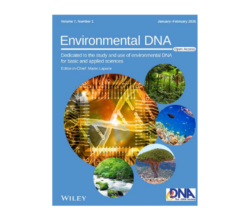
Environmental DNA is an open access eDNA journal that provides an international forum for basic and applied research papers on all areas of eDNA analysis. Papers may include ancient DNA, non-invasive sampling, diet analyses, metabarcoding, metagenomics, microbial ecology or pathogens. Our journal concentrates on primary research. We accept articles covering all areas of taxonomy – from microbes, fungi, plants, to animals – including past environments. As an open access journal, our reach is wide and our authors represent the diverse communities working in the environmental sciences. More information is available here: Environmental DNA – Wiley Online Library
We also have an exciting Special Issues program to help highlight the latest research on eDNA analysis. See our current Special Issue topics here: Environmental DNA Call for Papers . We also welcome proposals for special issues at any time, so don’t hesitate to get in touch with your ideas.
This site uses cookies. Find out more about cookies and how you can refuse them.