2023 Program

The program overview below is provisional and will be updated as planning proceeds. Please check this page regularly.

The program is listed in Australian Eastern Daylight Savings Time (AEDT). To calculate program times for your timezone, you can use the Time Zone Converter HERE

Click on each day to navigate your way through the program. 

Tuesday 14 February 2023

1400 Student & Early Career Researcher Registration Open

Hobart Function & Conference Centre, 1 Elizabeth Street Pier, Hobart
1430 – 1700 Student & Early Career Researcher Event

The ECR workshop provides the best start to the first in-person eDNA conference in an informal atmosphere. There will be opportunities to network with other ECRs, conference tips and tricks, a quiz with some fun prizes, and light refreshments.

The workshop is open for everyone who identifies as a student or early career researcher, but places are limited. So please register your interest ahead of time to ensure you get in. 

1500 – 1800 Exhibitor Bump In

Mezzanine Level, Hotel Grand Chancellor Hobart, 1 Davey Street Hobart
1700 – 1900 2023 eDNA Conference Welcome Reception

Hobart Function & Conference Centre, 1 Elizabeth Street Pier, Hobart
Registration will be open at the Welcome Reception.

Wednesday 15 February 2023

0800 – 1700 Registration Open

Mezzanine Level, Hotel Grand Chancellor Hobart

  OPENING PLENARY SESSION

Grand Ballroom, Hotel Grand Chancellor Hobart

0900 – 0915 Delegate Welcome & Housekeeping

Welcome to Country

0915 – 0945 Keynote Presentation

Beyond the Hype: Can eDNA really be transformational outside of research?

Dianne Gleeson

0945 – 1015 Keynote Presentation

Caring for Country: Indigenous Ranger engagement on eDNA sampling in northern Australia

Cecilia Villacorta-Rath

1015 – 1045 Keynote Presentation

Aotearoa/New Zealand Māori perceptions of genomic technologies and technologists: What does this mean for environmental DNA research and applications?

Phillip Wilcox

1045 – 1115 MORNING TEA & EXHIBITION

Mezzanine Level, Hotel Grand Chancellor Hobart

1115 – 1250 CONCURRENT SESSIONS
Concurrent Session 1

Biodiversity, Biogeography and Distributions

Grand Ballroom 1

Concurrent Session 2

Novel applications and environments

Grand Ballroom 2

Concurrent Session 3

Biosecurity & Monitoring

Grand Ballroom 3

Session Chair Maarten De Brauwer Dianne Gleeson Cindy Bessey
1115 – 1130 eDNA applications for improving knowledge of white shark biology and ecology

Zach Clark

Taking eDNA underground: evaluating the use of passive sampling to detect subterranean fauna in groundwater

Dr Mieke Van Der Heyde

Detection of exotic Khapra beetle, Trogoderma granarium, in dust samples collected from shipping containers in Australia

Jennifer Soroka

1130 – 1145 Environmental DNA reveals a multi-taxa biogeographic break across the Arabian Sea and Sea of Oman

Dr Joseph Dibattista

Does sampling location, target species and methodology effect detection of fish DNA in lake sediment core samples?

Georgia Thomson-Laing

Introducing the Pest Alert Tool for screening metabarcoding data and informing biosecurity managers on the presence of unwanted species

Dr Anastasija Zaiko

1145 – 1200 Local distribution and habitat preferences of scalloped hammerhead sharks (Sphyrna lewini) using environmental DNA detection and ecological data

Alyssa Budd

Detection of khapra beetle environmental DNA using portable technologies in Australian biosecurity

Dr Alejandro Trujillo-González

eDNA applications to rare and invasive species in northern biosphere of Hokkaido, Japan

Prof. Hitoshi Araki

1200 – 1215 Fishing in two litres of water: fish metabarcoding at marine National Reference Stations in Australia

Dr Sharon Appelyard

Using environmental DNA to reconstruct target and by-product catch composition for fisheries vessels

Dr Madeline Green

Queensland Seaports eDNA Surveillance (Q-SEAS) Program – Enhancing early detection capabilities for invasive marine species and managing biosecurity threats

Anita Ramage

1215 – 1230 Pollen DNA metabarcoding identifies regional provenance and high plant diversity in Australian honey

Dr Liz Milla

eDNA monitoring to support conservation of cold-water fishes in the Queensland Murray Darling Basin

Jaye Lobegeiger (via video link)

1230 – 1235 Lightning Presentations


An overview of EDGES program 4 and 5

Professor Morten Allentoft

Environmental DNA to detect and classify avocado flower-visiting insects: Hass it got potential?

Joshua Kestel

1235 – 1240 A Snapshot into Future Warming: In situ Warming Drives Big Changes in Benthic Communities

Jessica Moffitt (via video link)

Museum specimen preservation media is a source of historical eDNA

Dr Erin Hahn

1240 – 1245 Determining distribution of ‘Irukandji’ jellyfish at Ningaloo using environmental DNA

Jessica Strickland

Exploiting bivalves, specifically the Pacific Oyster, as a natural eDNA sampling platform

Brett Bolte

1245 – 1250 Swabbing Degraded Ancient Rock Painting: A Preliminary Study on Biofilm Diversity Using Metabarcoding

Muhammad Iqram (via video link)

1250 – 1350 LUNCH & EXHIBITION

Mezzanine Level, Hotel Grand Chancellor Hobart

1350 – 1525 CONCURRENT SESSIONS
  Concurrent Session 4

Biodiversity, Biogeography and Distributions

Grand Ballroom 1

Concurrent Session 5

Novel applications and environments

Grand Ballroom 2

Concurrent Session 6

Biosecurity & Monitoring

Grand Ballroom 3

Session Chair Shaun Wilkinson Georgia Thomson-Laing Alejandro Trujillo-Gonzales
1350 – 1405 Environmental DNA metabarcoding for temporal biodiversity assessment of remote north-west Western Australia marine environments

Marcelle Ayad

Leafmining for environmental DNA

Anthony van Rooyen

What I want eDNA technology to do for me: a practitioner’s perspective

Dr Benjamin Allen

1405 – 1420 eDNA and classical approaches combine to reveal novel stygofauna assemblages in the Beetaloo sub-Basin, Northern Territory

Gavin Rees

Combining eDNA and stereo-video sampling for the marine environment

Samuel Thompson

Bees as Biosecurity Biomonitors: exotic plant detection and identification to monitor plant invasions

Dr Andrew Cridge

1420 – 1435 Day length is a significant driver of seasonal microbial diversity in polar, temperate and tropical marine time-series

Dr Eric Raes

Honey bee surveillance as a tool for integrated biosecurity

Dr John Roberts

1435 – 1450 Patterns and drivers of macroalgal ‘blue carbon’ transport and deposition in near-shore coastal environments

Dr Adam Miller

What can we do with poo? Using molecular analysis of scats to inform mammal conservation

Dr Anna Hopkins

eDNA Metabarcoding ‐ a new approach to the monitoring of mine site restoration

Dr Paul Nevill

1450 – 1505 Pollen DNA metabarcoding reveals high diversity of alpine plant-pollinator networks

Dr Francisco Encinas-Viso

Untangling ecological change and ancient eDNA degradation using a null modelling approach

Karin Zwiep (via video link)

Estimating the impacts of the Black Summer bushfires on biodiversity using eDNA

Dr Reid Tingley

1505 – 1510 Lightning  Presentations Holocene fire, climate and ecosystem change on Kangaroo Island

Lucinda Duxbury

Environmental DNA in practice: a roadmap towards integrating eDNA methods in marine monitoring programs

Dr Maarten De Brauwer

Contrasting patterns of biodiversity across wetland habitats using environmental DNA

Harry Coleman

1510 – 1515 Home is where the hollow is: revealing vertebrate tree hollow user biodiversity with eDNA metabarcoding

Joshua Newton

1515 – 1520 Using environmental DNA metabarcoding to quantify the regeneration of freshwater ponds macroinvertebrate communities in the UK

Harry Layfield

1520 – 1600 AFTERNOON TEA & EXHIBITION

Mezzanine Level, Hotel Grand Chancellor Hobart

1600 – 1715 CONCURRENT SESSIONS
  Concurrent Session 7

Biodiversity, Biogeography and Distributions

Grand Ballroom 1

Concurrent Session 8

Biosecurity

Grand Ballroom 2

Concurrent Session 9

Novel applications, frameworks and initiatives

Grand Ballroom 3

Session Chair Francisco Encinas-Vino Anastasija Zaiko Scott Morrissey
1600 – 1615 The spatial ecology of eDNA in a highly dynamic estuarine system

Dr Michael Stat

Optimising molecular surveillance approaches to maximise the detection of introduced marine taxa

A/Prof. Craig Sherman

Best practices in meta-barcoding of fungi: a case study on soils across Victoria, Australia

Camille Truong

1615 – 1630 Introduced species dominate DNA-based surveys of Southeast Asian lakes

Dr Mark De Bruyn

Non-destructive insect metabarcoding for biosecurity and plant protection: the case of the iMapPESTS project.

Dr Francesco Martoni

The Australian Reference Genome Atlas: An online platform to improve data discoverability

Keeva Connolly

1630 – 1645 Dark taxa in dark environments: eDNA in subterranean systems

Dr Nicole White

Establishing optimum eDNA replication for standardisation of freshwater fish and invertebrate monitoring in Aotearoa, New Zealand

Josh Smith

A Forensic Approach to Detecting Deadly Box Jellyfish

Scott Morrisey

1645 – 1700 Spatial and temporal variability of eDNA in the context of Aotearoa, New Zealand wetlands

Starsha Bird

eDNA as a tool to inform aquatic biosecurity management decisions: A case study on a South-East Queensland dam with a retrofitted fish passage facility

Nicolette Osborne (via video link)

1700 – 1715 eDNA reveals distribution of critically endangered estuarine pipefish (Syngnathus watermeyeri) in South Africa

Georgia Nester

Advancing marine invasive species surveillance tools in NSW

Luke Barron

Toward a Global Public Repository of Community Protocols to Encourage Best Practices in Biomolecular Ocean Observing and Research

Dr Jodie Van De Kamp

1715 – 1830 Poster Reception

Mezzanine Level, Hotel Grand Chancellor Hobart

Thursday 16 February 2023

0800 – 1700 Registration Open

Mezzanine Level, Hotel Grand Chancellor Hobart

PLENARY SESSION

Grand Ballroom, Hotel Grand Chancellor Hobart

0850 – 0905 Welcome to Day 2

Platinum Sponsor Address: Wilderlab

0905 – 0935 Keynote Presentation

Leaving the lab behind: a vision for eDNA/eRNA technologies

Jo-Ann Stanton

Presentation sponsored by Cawthron

0935 – 1005 Keynote Presentation

ANEMONE: The eDNA Monitoring Network in Japan

Michio Kondoh

Presentation sponsored by Illumina

1005 – 1035 MORNING TEA & EXHIBITION

Mezzanine Level, Hotel Grand Chancellor Hobart

1035 – 1135 CONCURRENT SESSIONS
Concurrent Session 10

Technical innovation

Grand Ballroom 1

Concurrent Session 11

Biosecurity & Monitoring

Grand Ballroom 2

Concurrent Session 12

Bioinformatics, analysis and visualisation

Grand Ballroom 3

Session Chair Mark Wallace Katrina West Jo Ann Stanton
1035 – 1050 Filter no more: A modified plankton sampler for rapid in-water eDNA capture

Xavier Pochon

Using eDNA to detect nutrient enrichment in estuaries

Anastasija Zaiko

Variational auto-encoder applied to eDNA outperforms traditional methods

Letizia Lamperti (via video link)

1050 – 1105 The complex effects of time, ambient temperature and UV intensity on vertebrate eDNA degradation in soil

Austin Guthrie

Wastewater as a rich source of DNA/RNA for community infectious disease surveillance

Joanne Chapman

WoMBot: Workflow for processing MetaBarcoding eDNA data from reads to significance calls on maps of spatio-temporal species distributions

Nenad Bartonicek

1105 – 1120 Splat That Scat To Find The Bat

Dr Rachael Impey

A targeted eDNA approach to detect and quantify Undaria pinnatifida

Jonika Edgecombe (via video link)

Optimising eDNA sampling strategies for improved detection likelihoods using biophysical models

Eric Treml

1120 – 1135 Developing new tools for invasive ant detection: a novel eDNA assay for yellow crazy ant detection in soil and water

Dr Natalia Andrade Rodriguez (via video link)

Environmental DNA biosurveillance of chelonid herpesvirus 5 (ChHV5) in Singapore’s endangered sea turtle populations

Dr Aden Ip

eDNA monitoring design for robust impact attribution

Dr Levente Bodrossy

1135 – 1140 QUICK BREAK – 5 minutes
1140 – 1310 CONCURRENT SESSIONS
Concurrent Session 13

Technical innovation

Grand Ballroom 1

Concurrent Session 14

Novel applications and environments

Grand Ballroom 2

Concurrent Session 15

Biosecurity & Monitoring

Grand Ballroom 3

Session Chair Lev Bodrossy Anthony Chariton Cecilia Villacorta-Rath
1140 – 1155 Maximizing passive eDNA collection using varied membrane materials

Dr Cindy Bessey

Metabarcoding of seawater environmental DNA reveals strong differentiation of coral reef communities across habitats

Laurence Dugal (via video link)

Comparing eDNA metabarcoding and morphology-based surveys for environmental monitoring of aquaculture enriched soft sediments

Alex Coutts

1155 – 1210 Improved yield and sensitivity of eDNA in riverine environments through overnight passive sampling

Shaun Wilkinson

Community shifts at volcanic CO2 seeps, an eDNA prospective

Michael Izumiyama

Modelling approaches to quantify operational performance and interpret results of molecular surveys

Kathryn Wiltshire

1210 – 1225 Biodiversity monitoring through environmental DNA obtained from filter-feeding organisms

Dr Gert-Jan Jeunen (via video link)

Detection of a marine to terrestrial transition in lake sediment from Baffin Island, Arctic Canada, using sedimentary DNA

Matthew Power

How environmental DNA survey methods are informing management of waterways across Greater Melbourne: from long-term research to routine application

Dr Rhys Coleman

1225 – 1240 Biodiversity on the fly: Carrion fly iDNA metabarcoding to monitor mammals in a fragmented terrestrial ecosystem

Kristen Fernandes (via video link)

Use of eDNA to understand spatiotemporal variability in phytoplankton diversity available as potential food for Crown-of-Thorns Seastar larvae in the Great Barrier Reef

Maria Gomez Cabrera

Comparing traditional and DNA-based methods for deriving river health indices

Dr Michael Shackleton

1240 – 1245 eDNA detection of a cryptic insect species using a novel collection technique in crops

Dianne Gleeson

Environmental DNA needs reference data for taxonomy-based conservation policy – A case study from Fiordland, New Zealand

Dr Paul Czechowski (via video link)

Lightning Presentations
Environmental DNA detection of the giant freshwater crayfish (Astacopsis gouldi)

Dr Alejandro Trujillo-González

1245 – 1250 Assessing genomics approaches for monitoring terrestrial invertebrate bioindicators for ecosystem restoration

Allyson Malpartida

1250 – 1255 Tracking the iconic Giant Triton snail on the Great Barrier Reef

Merle Schlawinsky

1255 – 1300 You can’t detect it if you don’t collect it: optimising eDNA sample collection techniques

Sebastian Mynott (via video link)

Lightning Presentations Biomonitoring of freshwater streams using bulk eDNA and CRISPR-Cas enrichment

Anya Kardailsky (via video link)


The conundrum of related taxa: Detection and authentication of pathogen DNA in bioarchaeological samples from the Pacific

Meriam Van Os (via video link)

1300 – 1305 Characterising biodiversity in two deep-sea canyons in Western Australia

Georgia Nester

1305 – 1310
1310 – 1400 LUNCH & EXHIBITION

Mezzanine Level, Hotel Grand Chancellor Hobart

1400 – 1530 CONCURRENT SESSIONS
  Concurrent Session 16

Technical innovation

Grand Ballroom 1

Concurrent Session 17

Bioinformatics, analysis and visualisation

Grand Ballroom 2

Concurrent Session 18

Diet and trophic interactions

Grand Ballroom 3

Session Chair Clare I. M. Adams Shane Herbert Craig Sherman
1400 – 1415 Investigating environmental DNA & RNA fate for biosecurity applications: A case study using the Mediterranean fanworm Sabella spallanzanii

Michelle Scriver

Free from the tyranny of taxonomy: a robust taxon-independent community index (TICI) for riverine ecological assessment

Dr Shaun Wilkinson

Using eDNA technologies to understand trophic interactions supporting white shark populations

Jess Fish

1415 – 1430 Antarctic krill (Euphausia superba) eDNA quantification and decay characteristics.

Dr Leonie Suter

Looking under the mat: benchmarking computational methods for analysing microbial datasets

Dr Matthew Campbell

Experimental evidence that the topological features of microbial co-occurrence networks respond to stressors

Dr Anthony Chariton

1430 – 1445 A new marine genomics initiative to aid research and conservation efforts

Priscila Goncalves

eDNAFlow, an automated, reproducible and scalable workflow for analysis of environmental DNA sequences exploiting Nextflow and Singularity

Dr Mahsa Mousavi

Can environmental DNA to be used to study adaptive diversification in aquatic systems? – A test case using the Lake Masoko Astatotilapia calliptera study system.

Zifang Liu (via video link)

1445 – 1500 Establishing Filter Feeding Organisms as Ecological Sentinels

Michelle Liddy (via video link)

Towards the standardisation of bioinformatic eDNA workflows for ocean conservation: Considerations and best practice for robust amplicon data analysis

Sebastian Rauschert

1500 – 1505

Full Length Oxford Nanopore 16S rRNA Amplicon Sequencing of Contaminated Drinking Water

William Taylor

Visualising gaps, overlaps and anomalies in taxonomic reference data for metabarcoding

Dr Annette McGrath (via video link)

Lightning Presentations
Using metabarcoding to identify threats to key trophic interactions supporting a commercial fishery in a climate change hotspot

Owen Holland

1505 – 1510 The importance of denitrification in oyster biofilm

Giulia Filippini (via video link)

1510 – 1515 Environmental DNA as a tool to assess groundwater Microbial communities in response to salinisation

Tess Nelson

1515 – 1520  

Keeping eDNA research out of the Trough of Disillusionment

Simon Jarman


Macroinvertebrate biomonitoring in tropical environments using next generation sequencing technologies

Dr Thomas Mooney


Identifying indicators of soil nutrient cycling on a restored mine site

Kate Montgomery

1520 – 1525
1525 – 1530
1530 – 1600 AFTERNOON TEA & EXHIBITION

Mezzanine Level, Hotel Grand Chancellor Hobart

1600 – 1700 CONCURRENT SESSIONS
  Concurrent Session 19

Technical innovation

Grand Ballroom 1

Concurrent Session 20

Biodiversity, Biogeography & Distributions

Grand Ballroom 2

Concurrent Session 21

Biosecurity and monitoring

Grand Ballroom 3

Session Chair Mahsa Mousavi Mousaviderazmahalleh Rachel Hale Morgan Ellis
1600 – 1615 Comparing eDNA collection methods for sampling community composition on marine infrastructure

Jason Alexander

A comprehensive eDNA metabarcoding survey of gelatinous zooplankton biodiversity in a changing Arctic

Ayla Murray

Assessing the reliability of eDNA as a tool for invasive non-native species and biodiversity monitoring in freshwater ecosystems

Jo James

1615 – 1630 Nanopore short-read sequencing: A quick, cost-effective and accurate method for DNA metabarcoding

Dr Aimee Van Der Reis

Towards understanding the liver fluke transmission dynamics on farms: detection of liver fluke transmitting snail and liver fluke-specific eDNA

Travis Beddoe

1630 – 1645 Rapid diagnostic of eDNA in environmental water

Meysam Khodaparast

Marine biodiversity patterns in an anthropogenically impacted oceanic archipelago: The first eDNA survey of the Ogasawara Islands

Ayse Haruka Oshima Acikbas

Environmental DNA monitoring and ecosystem resilience in the Murray Darling Basin

Dr Chris Hardy

1645 – 1700 Optimising detection of invasive marine species by characterising eDNA particle size

Kate Tuohey

Detecting cryptic terrestrial species in targeted eDNA sampling

Dr Joel Huey

1900 – 2300 2023 eDNA Conference Dinner

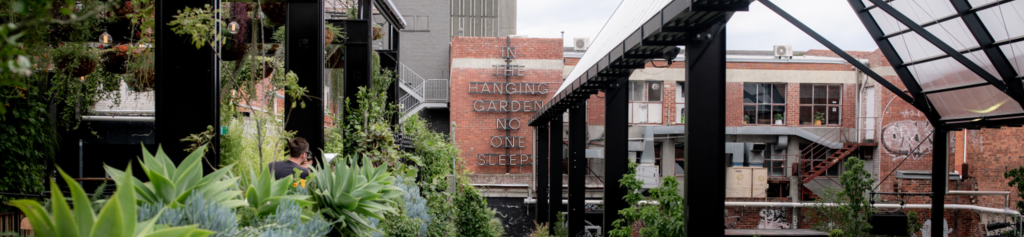
In The Hanging Garden, 112 Murray Street, Hobart

Join your fellow conference delegates for a night of networking and celebrations at the 2023 eDNA Conference Summit Dinner.  The dinner will be held at one of Hobart’s most popular venues, In The Hanging Garden.   The dinner will showcase local produce served as canapes, grazing stations and, also feature live cooking stations.  The cocktail style event will ensure there are plenty of networking opportunities but don’t worry, we will ensure there is plenty of food and seating! 
Friday 17 February 2023

0800 – 1700 Registration Open

Mezzanine Level, Hotel Grand Chancellor Hobart

  PLENARY SESSION

Grand Ballroom, Hotel Grand Chancellor Hobart

0900 – 0905 Welcome to Day 3
0905 – 0935 Keynote Presentation

The past, present and future of eDNA research

Elise Furlan

0935 – 1005 Keynote Presentation

eDNA through an aDNA lense: lessons from a related discipline

Morten Allentoft

Presentation sponsored by BHP

1005 – 1035 Introduction of the Southern eDNA Society & Discussion
1035 – 1110 MORNING TEA & EXHIBITION

Mezzanine Level, Hotel Grand Chancellor Hobart

1110 – 1250 CONCURRENT SESSIONS
Concurrent Session 22

Technical innovation

Grand Ballroom 1

Concurrent Session 23

Citizen science, uptake and translation

Grand Ballroom 2

Concurrent Session 24

Beyond presence-absence

Grand Ballroom 3

Session Chair Mieke Van Der Heyde Xavier Pochon Natale Snape
1110 – 1125 Detecting marine pests using eDNA and Biophysical models

Morgan Ellis

Community engagement and empowerment through eDNA technology in Aotearoa

Amy Gault

Using broad scale eDNA sampling to identify correlates of platypus occupancy across south eastern Australia

Dr Emily McColl-Gausden

1125 – 1140 Environmental DNA detection by CRISPR-Cas13a

Jiwei Yang

Wai Tūwhera o te Taiao – community and iwi/hapū-led discovery using environmental DNA (eDNA)

Vanessa Crowe & Avalon Adams

Single cell sequencing of environmental cells (emCells)

Dr Haylea Miller

1140 – 1155 Optimising eDNA methods for routine groundwater biomonitoring, biodiversity studies and environment impact assessments

Dr Kathryn Korbel

The Great Victorian Wildlife Search: scaling biodiversity assessments using citizen scientists and eDNA metabarcoding

Dr Andrew Weeks

Extending eDNA capabilities via long-range PCR and third-generation sequencing

Dr Katrina West

1155 – 1210 The development of a metabarcoding assay panel for freshwater ecosystem monitoring in Aotearoa New Zealand

Amy Gault

Studying fish biodiversity in Canadian rivers by engaging local communities in environmental DNA monitoring

Dr Bettina Thalinger (via video link)

Environmental DNA reflects common genetic variation

Clare Adams

1210 – 1225 The effectiveness of eDNA as a monitoring tool for infauna present in the intertidal zone of a sub-tropical coastal habitat in Western Australia

Harrison Carmody (via video link)

The utility of Environmental DNA methods to provide insights into green roof biodiversity

Jack Rojahn

More than the diet: eDNA metabarcoding can reveal behavioural information of the tropical cleaner fish

Pauline Narvaez (via video link)

1225 – 1230 Lightning Presentations Using pollen meta-barcoding to understand pollinator preferences in urban greenspaces

Katherine Berthon (via video link)

Mapping marine park coverage and detecting cryptic populations of sea snakes using eDNA

Amelia Pointon

Sequence our Seas (SoS): A community program to introduce eDNA at high schools in Western Australia

Shane Herbert

1230 – 1235 eDNA sensing of Irukandji jellyfish

Sarah Stephenson

Using citizen science and new DNA technology to rapidly increase our baseline knowledge of fungal ecology

Ema Corro

1235 – 1240 Assessing diversity and distribution of dinoflagellates in Australian marine waters using eDNA and High Throughput Sequencing (HTS): comparisons with traditional taxonomic methods

Dr Tahnee Manning

1240 – 1245  
1245 – 1250
1250 – 1350 LUNCH & EXHIBITION

Mezzanine Level, Hotel Grand Chancellor Hobart

1350 – 1520 CONCURRENT SESSIONS
  Concurrent Session 25

Data: use, re-use, and reference libraries

Grand Ballroom 1

Concurrent Session 26

Citizen science, uptake and translation

Grand Ballroom 2

Concurrent Session 27

Beyond presence-absence

Grand Ballroom 3

Session Chair Simon Jarman Alyssa Budd Haylea Miller
1350 – 1405 Three pillars of reference sequences for the implementation of applied eDNA metabarcoding

Kristen Westfall

National eDNA Testing Program

Dr Geoff Grossel

Inferring the occupancy of exotic fish in lakes using environmental DNA

Maïlys Picard

1405 – 1420 An authoritative DNA reference library for Australia’s species

Jenny Giles

Practical applications of eDNA sampling and analysis in a government agency context

Dr Josephine Hyde

Clues from poos: Assessing fox density and potential impacts on threatened migratory bird species in the Gippsland Lakes

Josh Griffiths

1420 – 1435 Building a custom reference library for subterranean groundwater fauna living in the ancient Pilbara (Western Australia) landscape

Dr Michelle Guzik

Integrating eDNA monitoring into biosecurity management in the Torres Strait

Jessica Sabatino & Aunty Enid Tom

DNA metabarcoding is not quantitative, but how should we evaluate if sequence counts are a useful proxy for biomass?

Bruce Deagle

1435 – 1450 The importance of curated permanent collections in improving eDNA reference databases for the marine environment

Jaret Bilewitch

eDNA can improve water and sediment quality management – A case study of the Ranger Uranium Mine

Dr Andrew Harford

Estimating the biomass of one (but not two) iconic Australian fish species using eDNA

Dr Meaghan Duncan

1450 – 1505
The value of biobanking eDNA samples: mapping freshwater mussels and decapods in Melbourne’s catchments

Dr Luke Noble

Pushing the boundaries of eDNA research – opportunities to inform Australia Marine Park management

Dr Steffan Howe

eDNA monitoring for early warning of Crown-of-Thorns seastar (Acanthaster spp.) outbreaks: Genetic detection of larvae and post-settlement individuals at extremely low densities

Dr Sven Uthicke

1505 – 1510

Andrew Bissett
Working with microbiome researchers to extend data life cycle beyond single studies
Lightning Presentations Developing eDNA tools to understand fish populations in streams

Alexander Vaishampayan

1510 – 1515
Kaitiakitanga o te Moana / Caring for our ocean

Gerd Banke

1515 – 1520
1520 – 1550 AFTERNOON TEA & EXHIBITION

Mezzanine Level, Hotel Grand Chancellor Hobart

1550 – 1700 CLOSING PLENARY SESSION

Grand Ballroom, Hotel Grand Chancellor Hobart

1550 – 1620 Keynote Presentation

From PCR to policy & people: What pathways should eDNA take to realise its full potential?

Mike Bunce

Presentation sponsored by Bioplatforms Australia

1620 – 1700 Awards Presentation & Conference Close